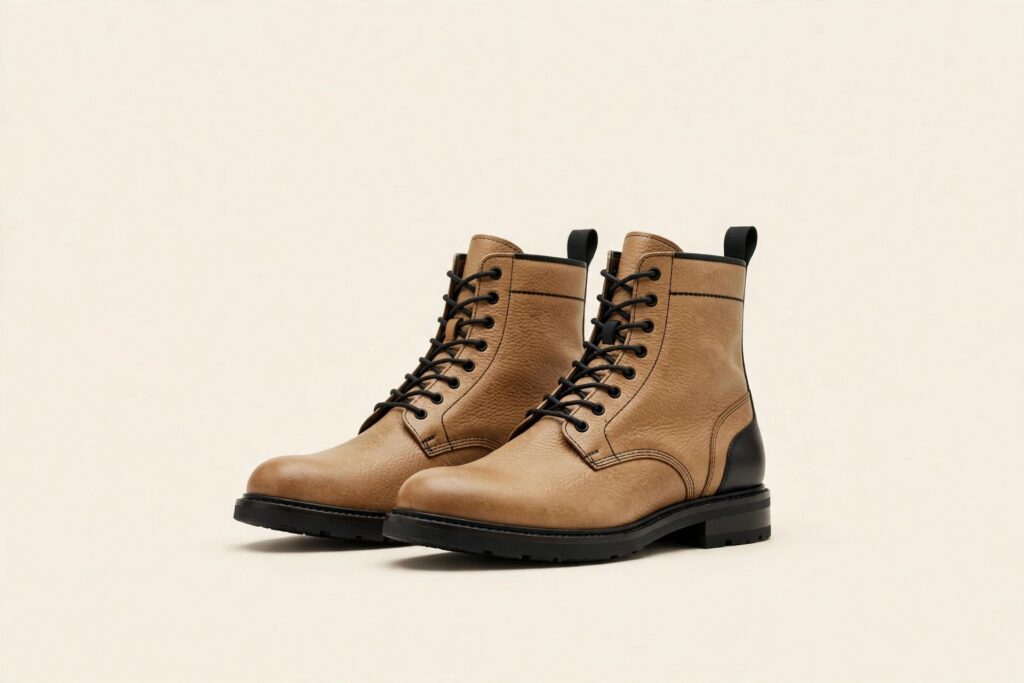
A good boot fit comes down to three checks: leave roughly a thumb’s width of space at the toes, match the boot width to the widest part of your foot, and expect a short break-in where leather softens but length and pinch stay the same.
That sounds simple. It rarely feels simple in the shop.
Boots sit higher on the ankle than most shoes. They hold your foot with stiffer materials, thicker socks, and a shape that doesn’t stretch the way a knit trainer does. A size that feels fine for ten seconds on carpet can feel very different after a full day on pavement.
Why Boot Fit Feels Different From Sneaker Fit
Sneakers forgive a lot. Soft uppers flex, foam compresses, and laces can pull a loose heel into line for a while.
Boots are less forgiving. Leather, lined shafts, and structured toe boxes hold their shape. If the shape is wrong on day one, the boot will remind you about it for months.
Your foot changes during the day, too. Feet tend to swell a little by late afternoon, so a boot tried on first thing can feel tighter by evening.
Try boots later in the day, in the socks you plan to wear with them.
Start With Length: The Toe Room Check
Length isn’t just the number on the box. Brands cut lasts differently, so a size 9 in one boot can feel shorter or longer than a size 9 in another.
Stand up in both boots. Don’t judge length while sitting down.
Your weight spreads your foot when you stand, and that’s the position you need to test. Slide your foot forward gently until your toes lightly touch the front, then check the space behind your heel. As a common rule of thumb, you should be able to fit roughly an index finger behind the heel in that position.
Now push your heel back into the heel cup and lace up properly. Your longest toe — which isn’t always your big toe — shouldn’t press hard against the front when you walk or step down as if coming off a curb.
How much toe room is right?
Most fitters use roughly a thumb’s width of space in front of your longest toe as a rule of thumb for boots. That’s about the width of your thumbnail, not a full inch of empty space.
Too little room and your toes jam on slopes and long walks. Too much room and your foot slides forward, which causes its own problems: heel lift, friction, and toes banging anyway because nothing holds them back.
Walk around and take longer strides. Downhill movement — a ramp or steps in the shop — is where short boots show themselves fastest.
Toes should be able to wiggle and spread a little. They shouldn’t feel curled, stacked, or pinned at the sides. If your toes feel squeezed together, length alone may not be the issue. Width could be.
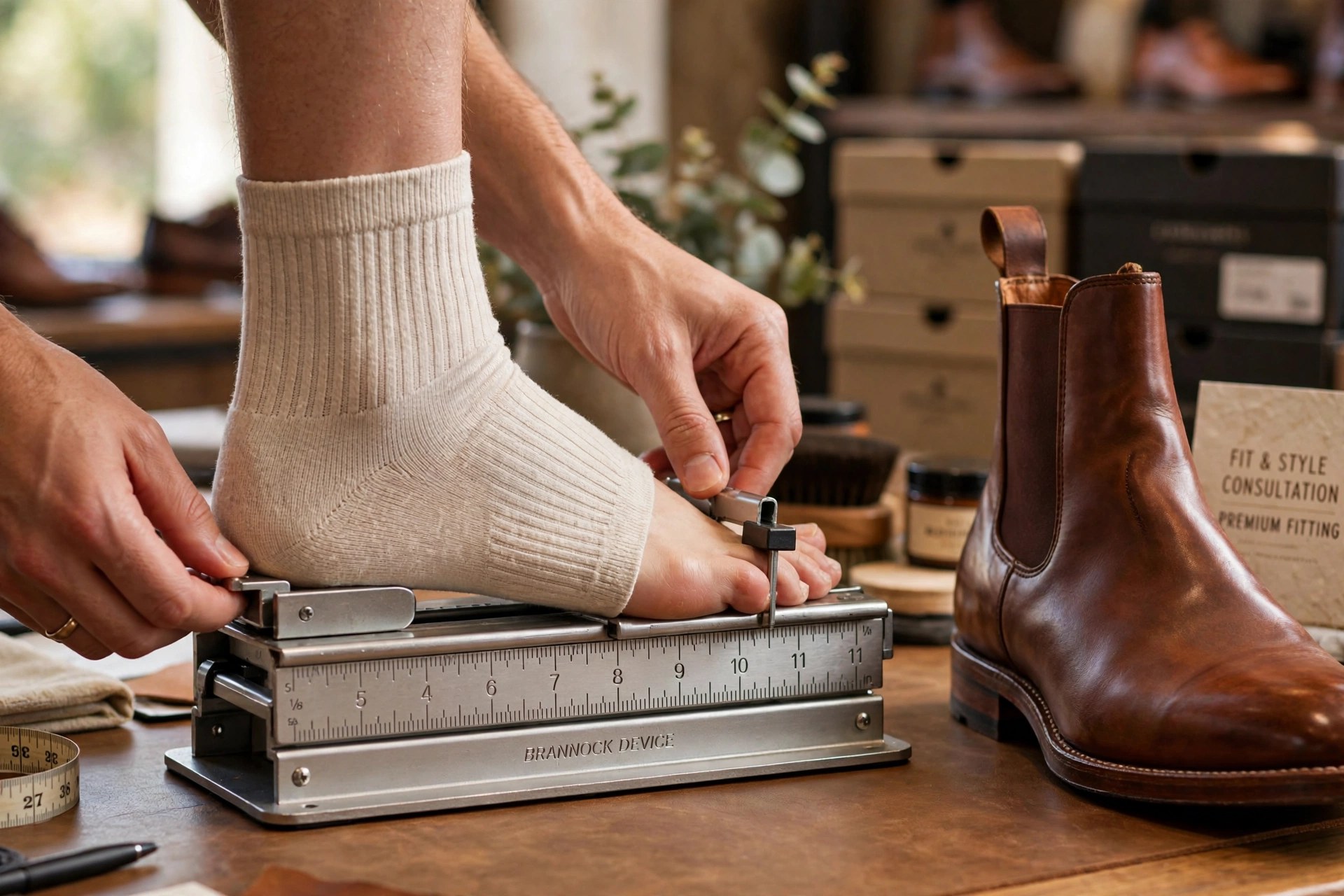
Width Is Where Most Boots Go Wrong
People often size up in length to fix a width problem. The boot feels less tight, so it seems like it worked.
It usually creates a new problem. Go too long and the boot flexes in the wrong place. The crease cuts across your toes instead of sitting behind them, the heel slips, and the arch lands in the wrong spot.
If a boot pinches across the ball of your foot, ask for a wider fitting before you ask for a longer size. That one swap solves more fit issues than any other change.
How boot widths are marked
Width labels vary by brand and country, which doesn’t help. In US men’s sizing, D is commonly the standard medium width, with E, EE, and EEE marking progressively wider fittings, and B or C marking narrower ones. In US women’s sizing, B is commonly medium, D is wide, and A or AA marks narrow fittings.
The widest part of the boot should line up with the widest part of your foot — the ball, where your toes join your foot. If that match is off, even soft leather will feel stubborn.
Signs the width is off
- Too narrow: Pinching across the ball, numbness or tingling after a few minutes, toes forced together, or leather bulging over the edge of the sole.
- Too wide: Your foot rolls side to side, the laces pull until the eyelets nearly meet, and the heel lifts even when laced firmly.
- Right width: Snug across the ball without pressure points, toes flat and able to move, heel held without being clamped.
Keep one word in mind: snug. Not painful, not loose. Pain is information, not a stage to push through.
Three Sizing Checks to Do Before You Buy
You don’t need special equipment. You need ten unhurried minutes and both boots on your feet.
1. The heel hold check
Lace the boots the way you would for a normal day, firm but not strangled. Walk briskly.
A small amount of heel movement in a new, stiff boot can settle as the heel cup shapes to you. Repeated lifting that slaps the heel up and down on every step won’t. That kind of slip means the size, width, or last shape doesn’t match your foot.
2. The ball alignment check
Find the ball of your foot with your hand. Then take a step and notice where the boot flexes.
The boot should bend roughly where your foot bends, just behind the toes. If the flex point sits far forward or far back, long walks will feel tiring and the leather will crease in odd places. This check catches a lot of wrong-length buys that toe room alone misses.
3. The sock and insole check
Boot socks change fit more than people think. A thick hiking or work sock can take up the space that made a boot feel perfect with thin dress socks.
Decide which socks this pair is actually for and test with that pair. Bring any insole or orthotic you plan to use, too — it lifts your foot higher in the shaft and can create pressure on top.
Break-In: What Should Change and What Should Not
Break-in is real, but it has limits. Leather softens. It moulds a little around your ankle and the top of your foot. Stiff soles gain a bit of flex.
Here’s what break-in doesn’t do. It doesn’t make a short boot longer. It doesn’t move a painful pinch point off a toe joint. It doesn’t fix a heel that lifts on every step.
A useful rule of thumb: pressure that feels like firm snugness can ease. Sharp pain, numbness, or rubbing that starts within minutes will usually get worse, not better. Blisters on your first long walk are a sign the fit was wrong, not proof you need tougher feet.
Break boots in gradually. Wear them around the house first, then on short walks, then for a full day. If a spot rubs, address it early — thicker socks, different lace tension, or a return while you still can. Don’t commit to a long day or a trip in boots you’ve worn for twenty minutes total.
Different Boots, Different Rules
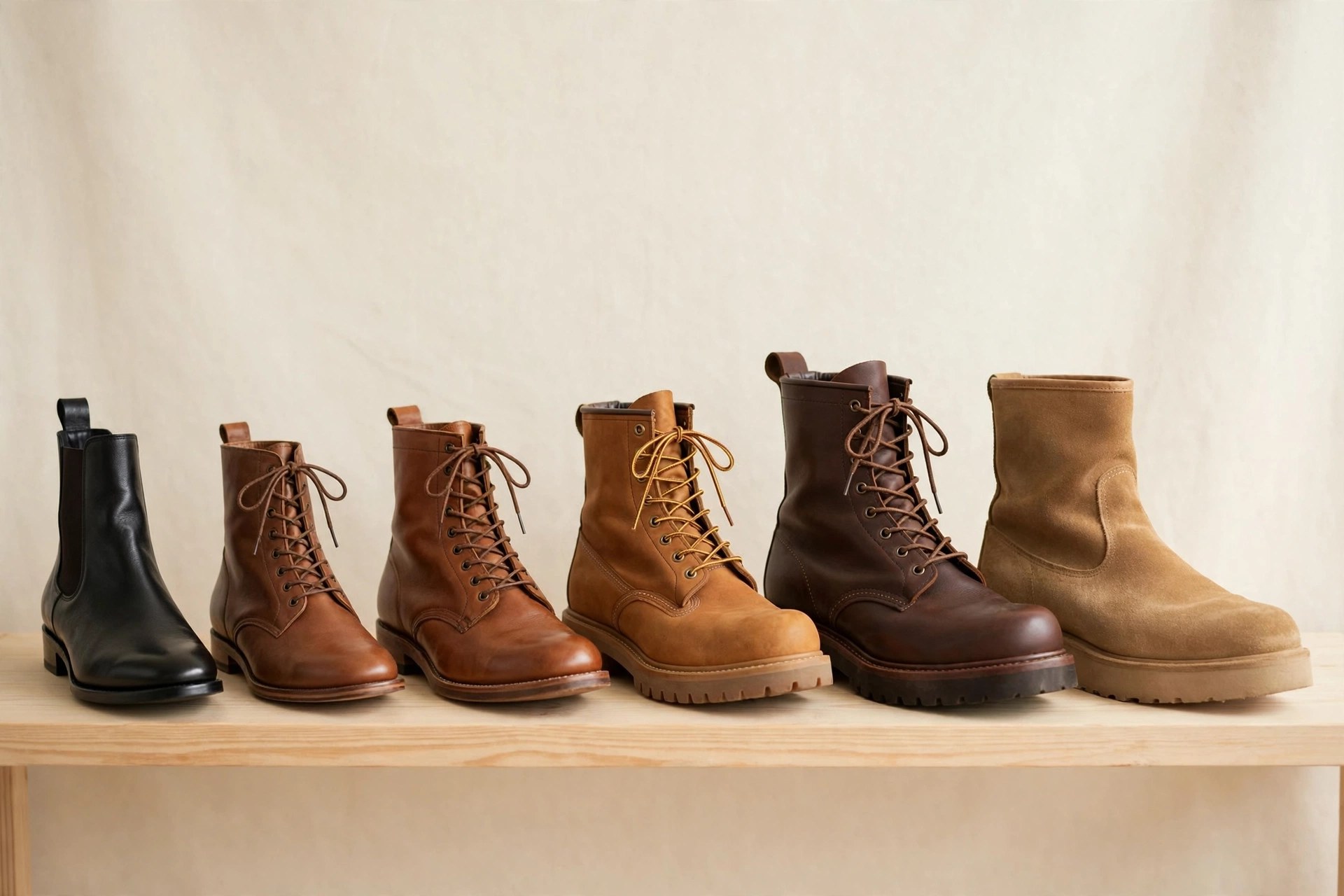
Dress and Chelsea boots sit closer to the foot, usually with thinner socks. They should feel sleek, not tight across the toes. With no laces to adjust, a Chelsea boot’s elastic panel and heel fit have to be right in the shop — you can’t tune them later.
Hiking and work boots need the full toe room rule of thumb and space for thicker socks. Your feet swell on long walks and work shifts, and downhill steps punish short boots. Lace them fully for the test walk, including the top hooks.
Cowboy and pull-on boots fit by a different logic. A new pair should feel snug across the instep — that’s what holds the boot on — with some heel slip at first that typically settles as the sole flexes. If the instep feels loose in the shop, no break-in will tighten it.
A Simple Order to Shop In
If the whole process feels messy, use this order every time.
- Measure both feet while standing, length and width. Feet are rarely identical — fit to the larger one.
- Start with your usual size in the width that matches your measurement, not just the length.
- Do the toe room, heel hold, and ball alignment checks in your real boot socks.
- If it pinches across the ball, change width before you change length.
- Judge break-in honestly. Snug can soften. Pain doesn’t.
That order prevents the most common mistake in boot buying: leaving with a longer boot that still doesn’t fit, just in a new way.
Good boots are a long-term purchase. Ten careful minutes in the shop can be the difference between a pair you reach for daily and a pair that lives at the back of the closet.
FAQ
Should boots feel tight when they are new?
They should feel snug, especially across the instep and around the heel, but never painful. Tightness that causes numbness, sharp pressure on a toe joint, or pinching across the ball usually means the length or width is wrong, and break-in rarely fixes those problems.
How much room should be at the front of a boot?
Use roughly a thumb’s width of space in front of your longest toe as a rule of thumb, checked while standing with your heel pushed back and the boots laced. Your toes should be able to wiggle without pressing hard against the front when you walk or step downhill.
Should I size up if a boot feels narrow?
Try a wider fitting first. Sizing up in length to escape a pinch often leaves the flex point in the wrong place and creates heel slip. Only go longer if the toe room check also shows your toes are too close to the front.
How long does it take to break in leather boots?
It depends on the leather and how often you wear them, so build up gradually rather than counting days. Start with short wears at home, then short walks, and only wear them for a full day once the snugness has eased and no spot is rubbing.